Carnaby Street was once home to an old windmill, surrounded by fields on the rural outskirts of London. As development spread north, ‘Karnaby House’ appeared in 1683, later demolished and replaced by small, terraced houses by the 1780s. These were soon occupied by Huguenot refugees, adding to the diversity of Soho.
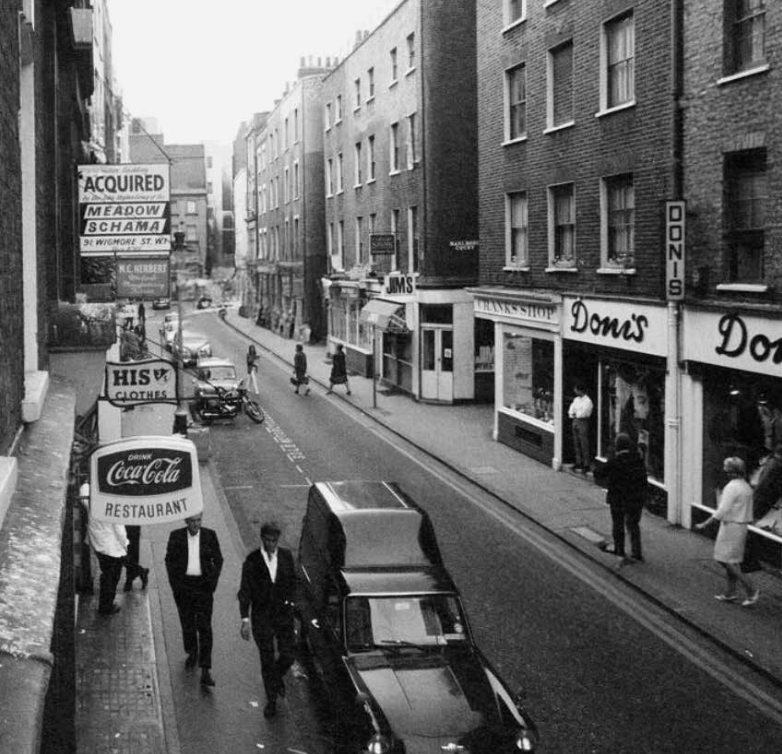
By 1820, many dwellings had been rebuilt or converted to commercial use, with the southern end occupied by small warehouses and workshops. The street evolved into a modest London high street serving a poor district, later becoming home to drapers, tailors, and seamstress studios supporting the suit and shirt- makers of nearby Savile Row.
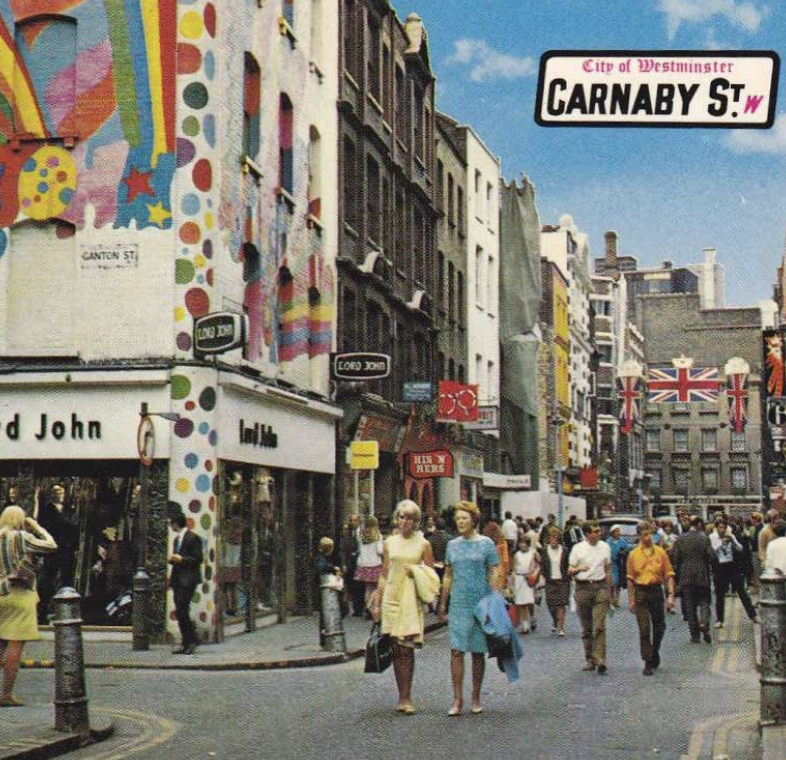
Carnaby Street is central to the memory of 1960s British pop culture. Known for its small, eclectic boutiques, it became synonymous with bohemian style and the creative energy that shaped a generation of designers, musicians, and artists. Its rise as a fashion hub began earlier, in the mid-19th century, when tailors and seamstresses opened here near Savile Row, catering to a more affordable market. By the 1960s, Carnaby Street attracted Mods seeking stylish, accessible clothing, with pioneering boutiques like Lord John leading the way.
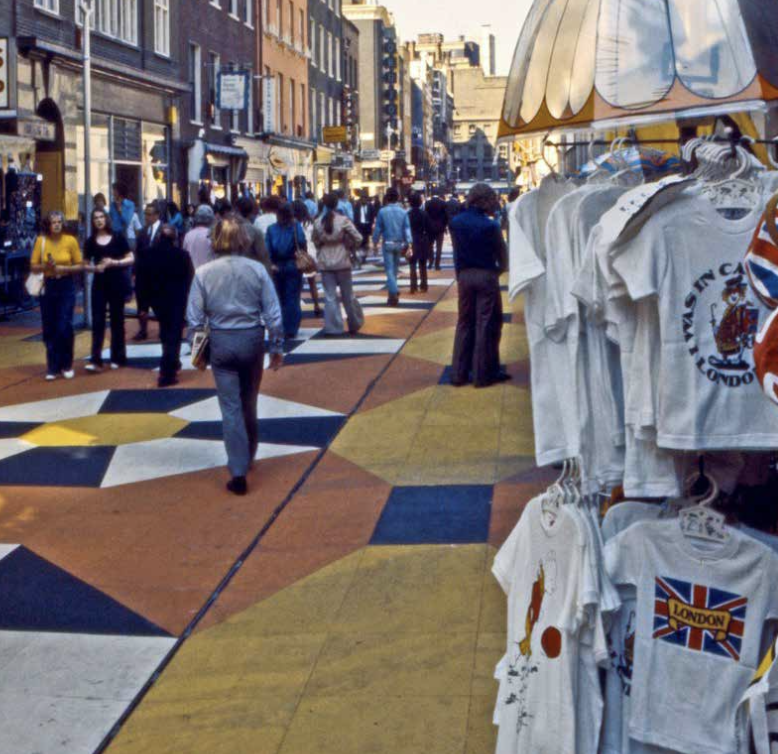
By the late 1960s, the craze faded. The Greater London Council pedestrianised the street in 1972, adding rubberised patterned paving, but despite these efforts, many independents gave way to chain stores and souvenir shops as the pop-culture spotlight moved on.
Today, Carnaby Street stands as a symbol of creativity and reinvention. Its streets continue to blend heritage with innovation, home to a mix of fashion, food, and culture that draws visitors from around the world. The next chapter will build on this unique character, evolving the street to meet the needs of a new generation while keeping its spirit unmistakably Carnaby Street.
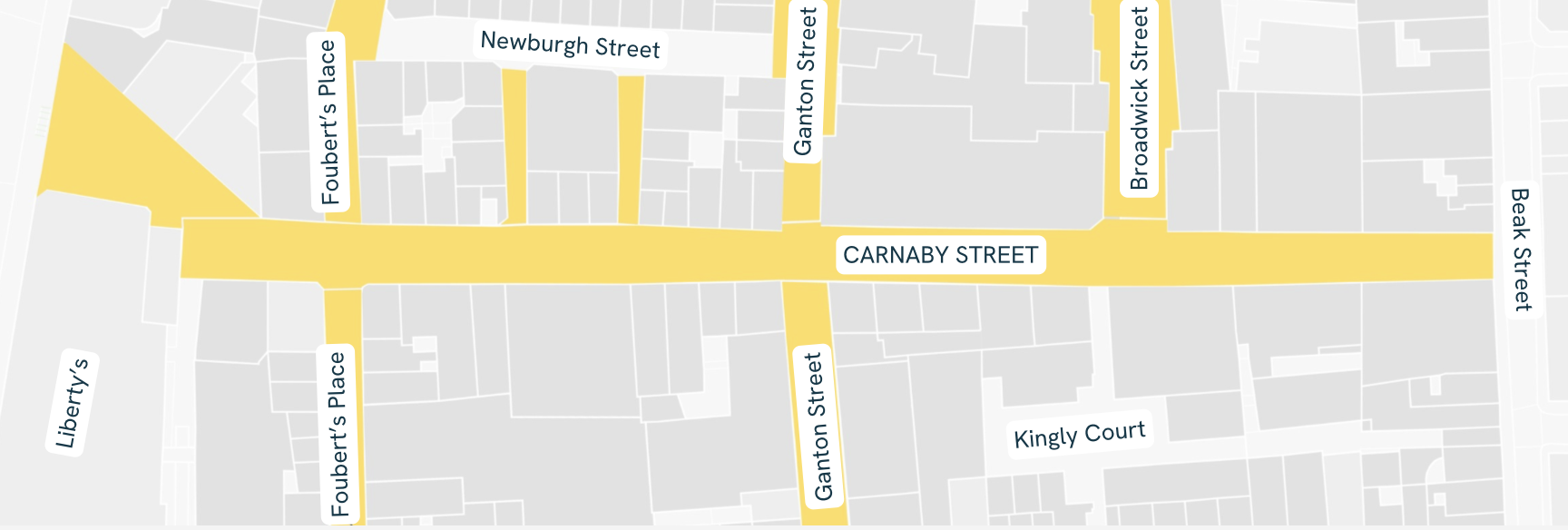
The Carnaby Street area sits at the heart of Soho, connecting key destinations across the West End. Our vision focuses on Carnaby Street and the surrounding streets, including Ganton Street, Foubert’s Place and Broadwick Street. These streets play an important role in how people experience the district and how it connects to Oxford Street, Regent Street and Soho.
Shaftesbury Capital’s vision is to build on what people already value about Carnaby Street, while keeping it true to its unique character. Early engagement has focused on testing priorities and aspirations across five themes:
Public realm & paving
Greening
Lighting
Wayfinding & signage
Public art & cultural programming

Disclaimer
We use ReCAPTCHA to help protect this website from spam and abuse. Any information you provide us with, should you wish to do so, will be held securely and processed in line with our privacy policy. You will only be contacted in relation to the project.